
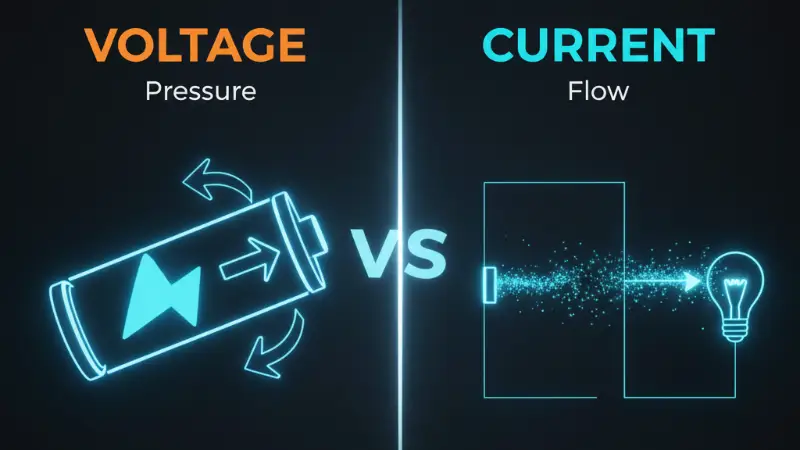
People mix these up all the time, even after years in electronics. Voltage and current are totally different beasts, but they team up to make electricity work. I’ve explained this to plenty of beginners, and the lightbulb moment is always fun.
The Classic Water Analogy That Clears It Up
This one’s stuck with me since school.
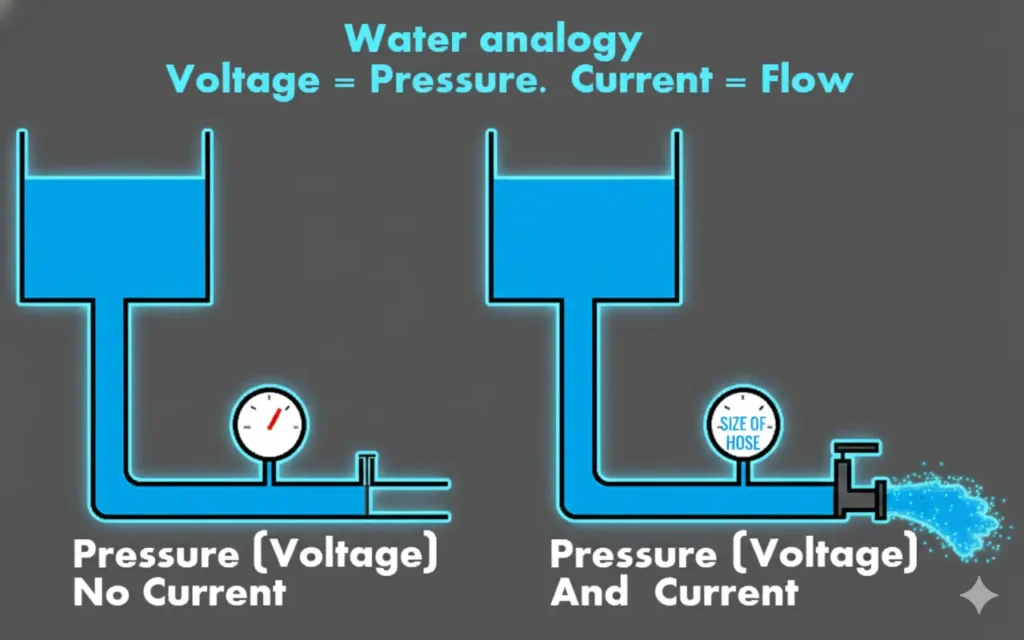
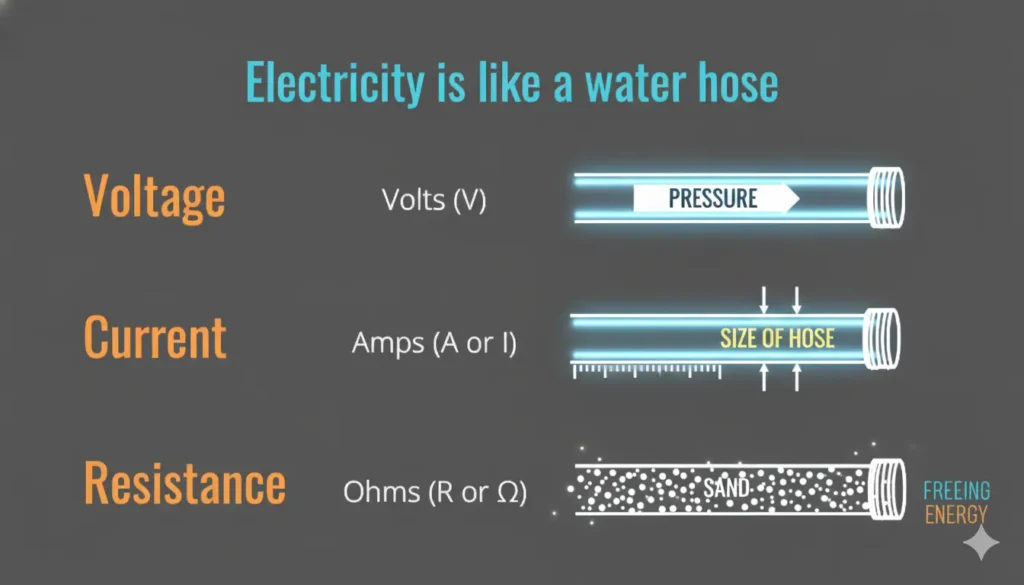
Imagine water flowing through a hose:
- Voltage is the water pressure – the force pushing the water along. High pressure shoots it far; low pressure just trickles.
- Current is the amount of water flowing per second – the volume moving through the hose.
You can have high pressure (voltage) with barely any flow if the hose is pinched shut. Or lots of flow (current) with low pressure if the hose is wide open and gravity helps.
Straight-Up Definitions
- Voltage (V, in volts): The electrical potential difference – basically the “push” that drives electrons through a circuit. It’s like the height difference in a waterfall; more height, more potential energy to move things.
- Current (I, in amps): The flow of electric charge – how many electrons pass a point per second. No flow, no work gets done, even if there’s tons of push waiting.
Voltage exists even without current (like a battery sitting on a shelf). But current needs voltage to happen, and something to flow through.

How They Relate: Ohm’s Law Ties It Together
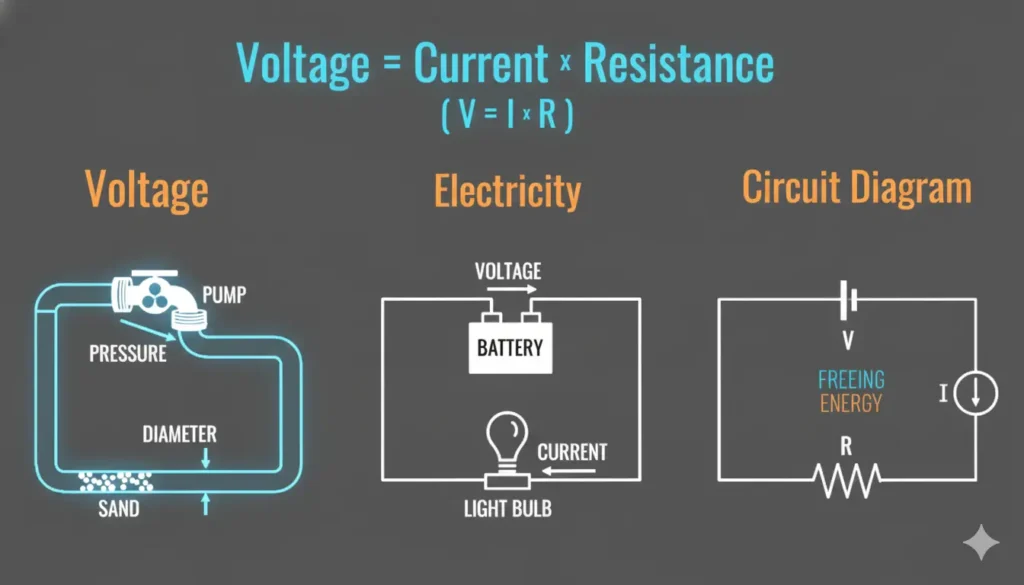
Resistance decides how much current you get for a given voltage.
V = I × R
That triangle is handy – cover the one you want to solve for.
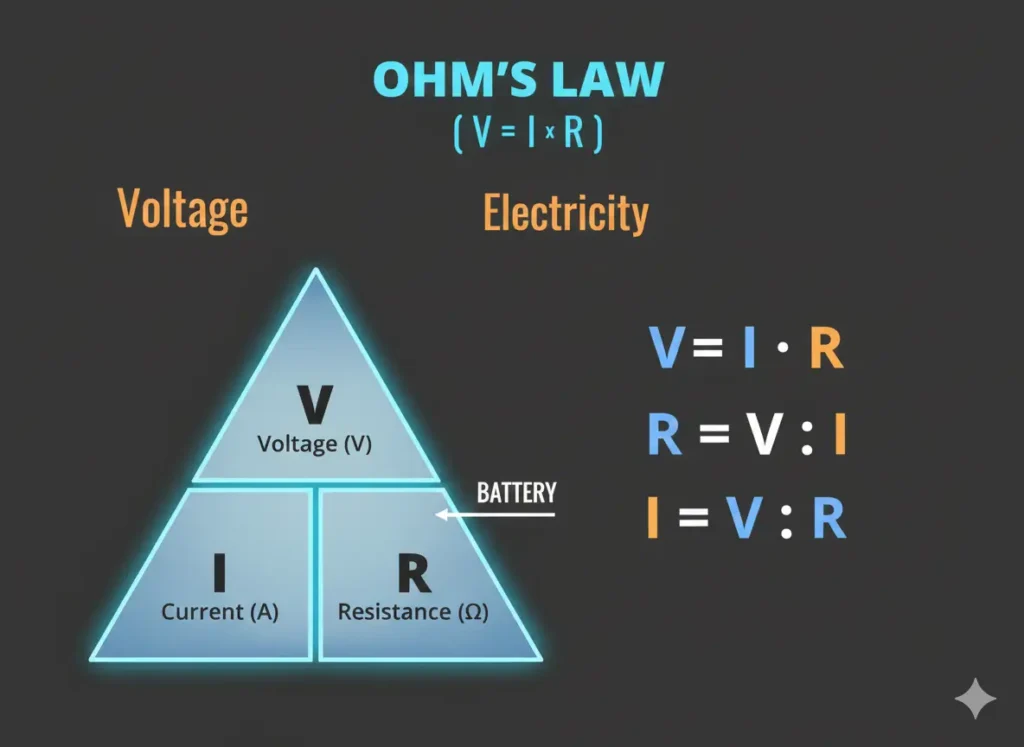
Double the voltage, current doubles (if resistance stays same). Halve resistance, current doubles.
Real-Life Examples
Hook a 1.5V battery to a small bulb – it lights dimly because the voltage push isn’t huge.
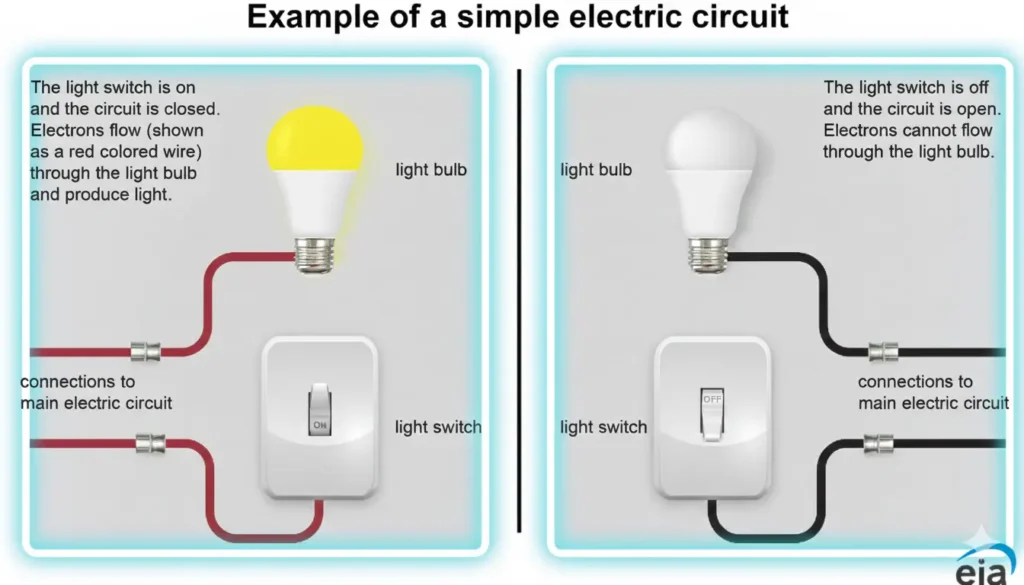
Use a 9V battery on the same bulb – way brighter, more voltage means more current through the bulb’s resistance.
Wall outlets give 120V (US) – big push, so even with some resistance, lots of current flows to power a toaster.
Car batteries are 12V but crank hundreds of amps (current) because the starter has very low resistance.
Birds on power lines? High voltage, but no current through the bird since both feet are at the same potential – no voltage difference.
Common Mix-Ups I’ve Seen
Folks say “high voltage means high current” – nope, depends on resistance. Touch a 10,000V static shock? Tiny current, just a zap. But low voltage with high current (like a car battery short) can weld metal.
Another: Thinking current gets “used up” in a circuit. Voltage drops across components, but current stays the same in series.
Quick Practical Tips
Use a multimeter: Set to volts for voltage (parallel across), amps for current (in series – careful, it can blow fuses).
When buying gadgets, check voltage compatibility first – wrong one fries it. Current rating tells max it can handle.
For safety, remember: It’s the current that kills, but voltage gets it flowing through you.
FAQs on Voltage vs Current
Can you have voltage without current? Yeah, open circuit – like an unplugged charger has voltage ready, but no flow.
Can you have current without voltage? No way – need that push to start and keep flow going.
Which one shocks you more? Current does the damage, but high voltage overcomes your skin resistance to allow dangerous current.
Why do batteries list voltage but not always current? Voltage is fixed; max current depends on internal resistance and what you connect.
How does this apply to my phone charger? Wall: high voltage, low current in. Charger drops voltage to 5V, controls current to safe levels.