
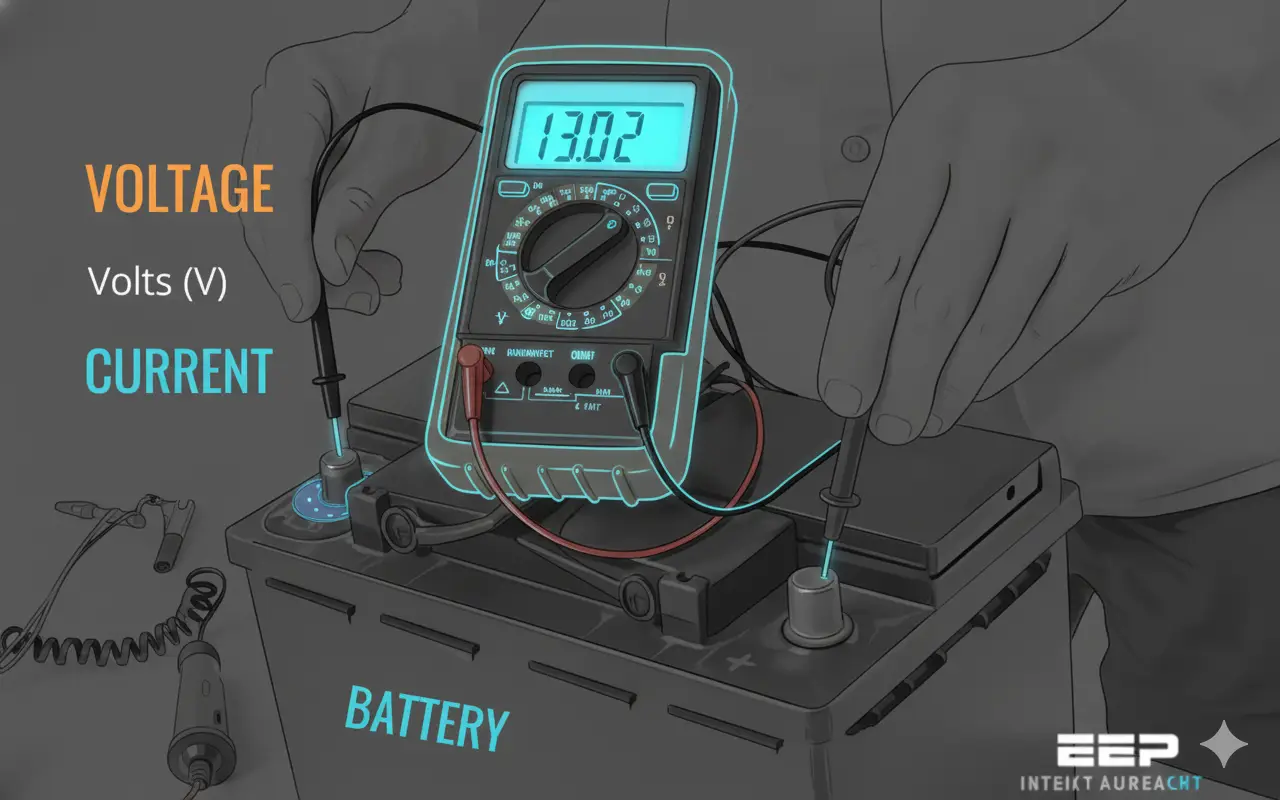
If you’ve ever wondered why a battery makes a bulb light up or why some wires get hot, it boils down to three key things: voltage, current, and resistance. I’ve been messing around with electronics for years, and these basics changed everything for me once I got them straight.
They’re the building blocks of how electricity behaves in circuits. Let’s unpack them without the heavy textbook feel.
The Water Analogy That Finally Clicked for Me
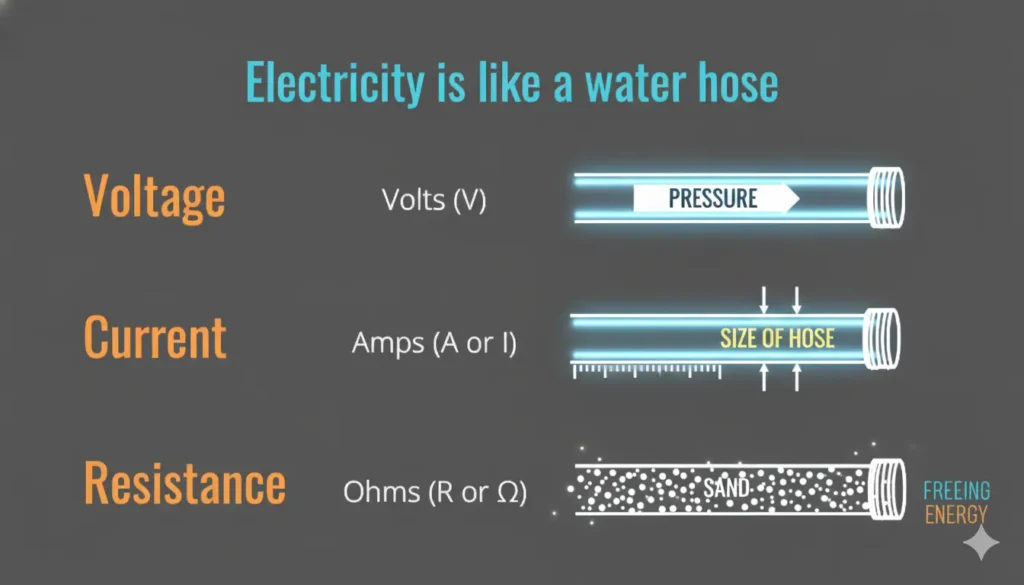
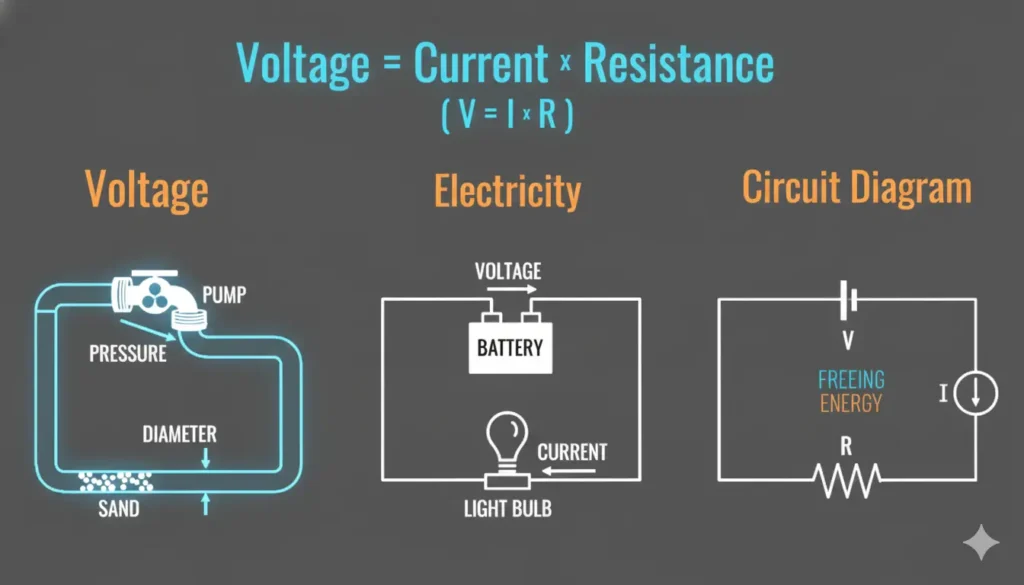
The best way I’ve found to explain this is comparing electricity to water flowing through pipes. It just makes sense.
- Voltage is like the water pressure → the “push” that forces water (or electrons) to move. Higher pressure means stuff flows faster or harder.
- Current is the flow rate → how much water passes a point per second. In electricity, it’s how many electrons zip by.
- Resistance is the pipe’s narrowness or kinks → it slows down the flow. Thinner pipes mean more resistance.
No pressure? Nothing flows. Tiny pipe? Low flow even with high pressure.
Breaking Down Voltage, Current, and Resistance
Here’s each one in plain terms.
- Voltage (V, measured in volts): The electrical “pressure” or potential difference between two points. It pushes electrons through a circuit. Batteries create voltage via chemicals; outlets give about 120V in the US. Too little voltage, and your gadget won’t start. Too much, and poof – fried components.
- Current (I, measured in amps): The amount of electric charge flowing past a point per second. Think electrons marching along the wire. Low current might dimly light a bulb; high current powers a heater.
- Resistance (R, measured in ohms, Ω): How much a material opposes the flow of current. Good conductors like copper have low resistance; insulators like rubber have high. Resistors in circuits control the flow on purpose.
These three always work together in any circuit.
Ohm’s Law: The Simple Relationship Between Them
This is the magic formula that ties it all together: V = I × R.
Voltage equals current times resistance. I’ve used this countless times to figure out why something isn’t working.
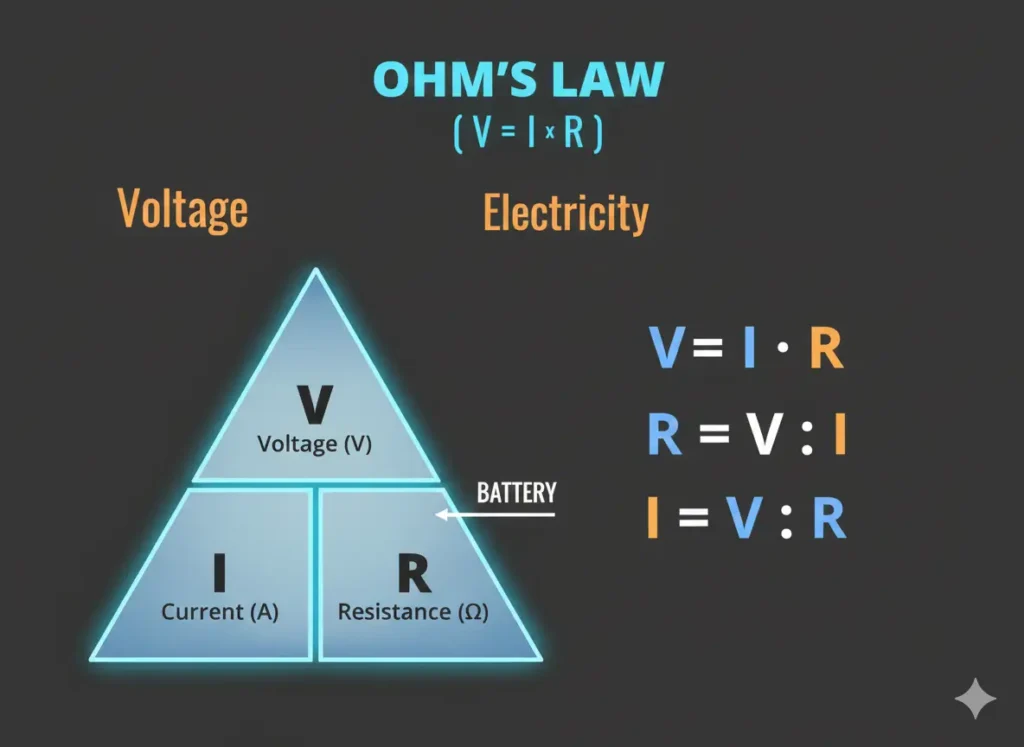
To calculate:
- Current: I = V / R
- Resistance: R = V / I
Example: A 9V battery connected to a 3Ω resistor. Current = 9 / 3 = 3 amps.
Power (watts) is P = V × I, so that’s 27 watts here – enough to heat things up.
Real-Life Examples and Common Mix-Ups
Take a phone charger. The wall outlet provides high voltage (120V), but the charger steps it down to 5V safe for your phone, limiting current so it doesn’t overload.
Common mistake: Thinking thicker wires are for higher voltage. Nope – they’re for lower resistance, allowing more current without heating up. I’ve seen extension cords melt from too much current through thin wires.
Another: Confusing AC and DC voltage. Household is AC (alternating), batteries DC (direct). Most gadgets convert AC to DC inside.
Practical Tips I’ve Learned the Hard Way
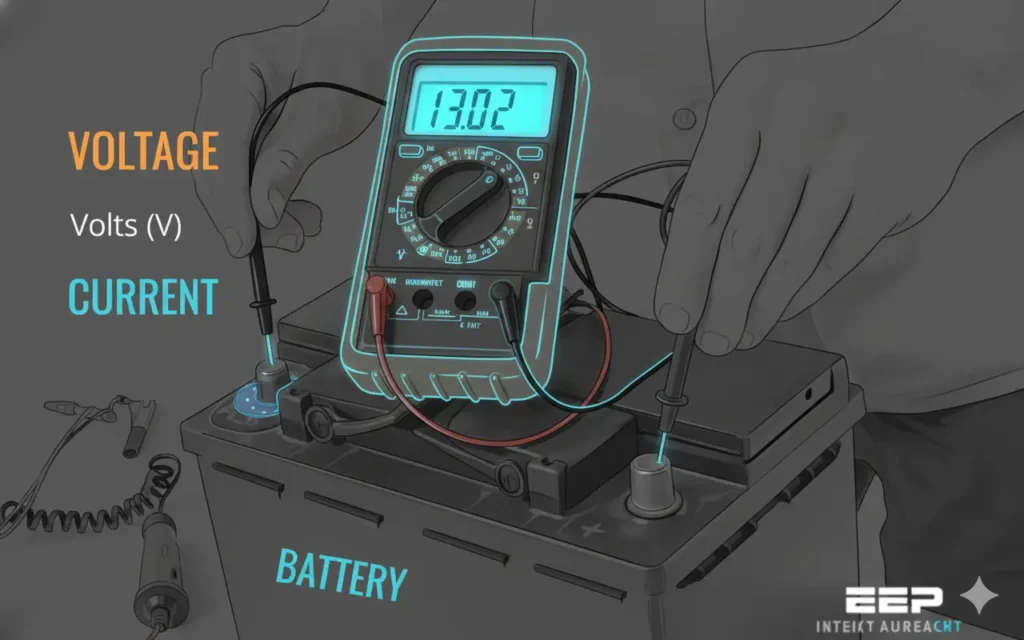
Grab a cheap multimeter – it’ll measure voltage, current, and resistance. Start by checking batteries: set to DC volts, touch probes to terminals.
When wiring stuff, match voltage to the device. Wrong voltage kills things fast.
For home projects, use fuses or breakers – they cut current when resistance is too low (like a short circuit).
To lower your electric bill, look for high-resistance inefficiencies, like old incandescent bulbs that waste power as heat.
Always double-check polarity on DC stuff. I’ve smoked LEDs by reversing voltage.
FAQs About Voltage, Current, and Resistance
What’s the difference between voltage and current? Voltage is the push, current is the actual flow. You can have high voltage with no current if the circuit’s open.
Why do birds sit on high-voltage wires without getting shocked? No complete circuit – same voltage on both feet, no current flows through them.
How do I measure resistance safely? Always on a powered-off circuit. Measuring live can damage your meter.
Can resistance change? Yeah, with temperature – wires heat up, resistance rises, which can limit current naturally.
Is higher resistance always bad? Not at all. We use resistors to dim LEDs or divide voltage in circuits.
Wrapping This Up
Voltage, current, and resistance are the core trio that make electricity do its thing. Once you see them as pressure, flow, and opposition, circuits stop being mysterious. Play around with a simple kit – it’ll stick better than reading alone. Stay safe out there, and you’ll get the hang of it quick.